For Lord Meghnad Desai- Contesting Heterosexual Norms
I wrote a piece about how those who refuse to confirm to heterosexual norms in parts of south Asia can face violent retrubution. The refusals might take the form of inter-faith or cross-caste marriage or homosexual partnerships. On the other hand there have been great strides in the same region towards recognition and legitimacy of non-hetrosexual partnerships or unions. My central theme is about the nature and targets of sexual control, especially how it plays out for women – and for men who refuse follow the rules- and how they are contested.
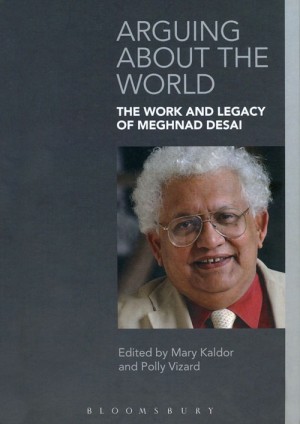
This piece was published in Arguing About the World: the Work and Legacy of Meghnad Desai. (ed Vizard and Kaldor). Meghnad taught me on my MSc in 1991 and then became a firm friend for many decades until his passing in 2025. I shall miss him terribly; his wisdom, his reliable friendship through so many challenging situations and his ability to dance all night will remain cherished memories.
Introduction
In 2009 widespread celebrations greeted a historic Indian High Court judgement that ruled that the criminalization of homosexual acts contravened fundamental rights including the right to equality as enshrined in the Constitution. 2008–9 saw the advancement of Lesbian, Gay, Bisexual and Transgender (LGBT) rights in Nepal too, a development acknowledged and greeted with hope in and beyond the country. There was a sense of optimism that conservative attitudes to sexuality were loosening their grip on the lives of Indians and Nepalis.
In contrast, in 2010 the media reported case after case of ‘honour killings’ in northern India, mostly related to young people choosing marital partners and often perpetrated by the family of the woman concerned. These two threads, apparently contradictory, speak to the nature of change and resistance in the arena of sexual choice and sexuality. Conclusions may yet be premature but there are some interesting indications about the spaces in which sexual straightjackets will continue to be challenged.
Sexual rules and power dynamics enable or constrain individual lives, impacting on health and indicating the state of individual rights, freedoms, and opportunities. The HIV epidemic has enabled, or perhaps forced, attention onto the nature of, and the negotiation around, hetero-, homosexual and MSM1 activity. Gender and development discourse has also tackled this taboo, asking us to look into the institutions of marriage and the household which shape ‘normal’ sexual relations. A recent interest in violence against women has further pushed us to problematize the construction of female sexuality and efforts to control it, and has promoted the links between these concerns and development agendas.
This chapter considers two aspects of sexuality considered ‘unauthorized’ or non-standard: the first in the context of husband-wife heterosexual partnerships; the second, homosexual relationships. I look at events in India and Nepal, neighbouring countries where there appear to have been important shifts in the community policing of heterosexual relations (in India) and steps towards acceptance of homosexuality (in both India and Nepal). At first these dynamics seem to be at odds with each other – one moving in a progressive direction and the other conservative. But I conclude that they do not constitute a single site of struggle over sexuality. Rather, the control of male sexual access to women takes a course that is different and possibly distinct from the struggles for respect and legitimacy for gay, lesbian and trans lives.
Read the rest of the chapter here http://www.bloomsburyacademic.com/view/Arguing-About-The-World/chapter-ba-9781849665469-chapter-006.xml